
30+ qualified showings.
At Day 14 the showings ledger should read as 30+ qualified appointments, with at least half broker-represented. Below 20 means the message is not penetrating; above 45 means the price is leaving money on the table.
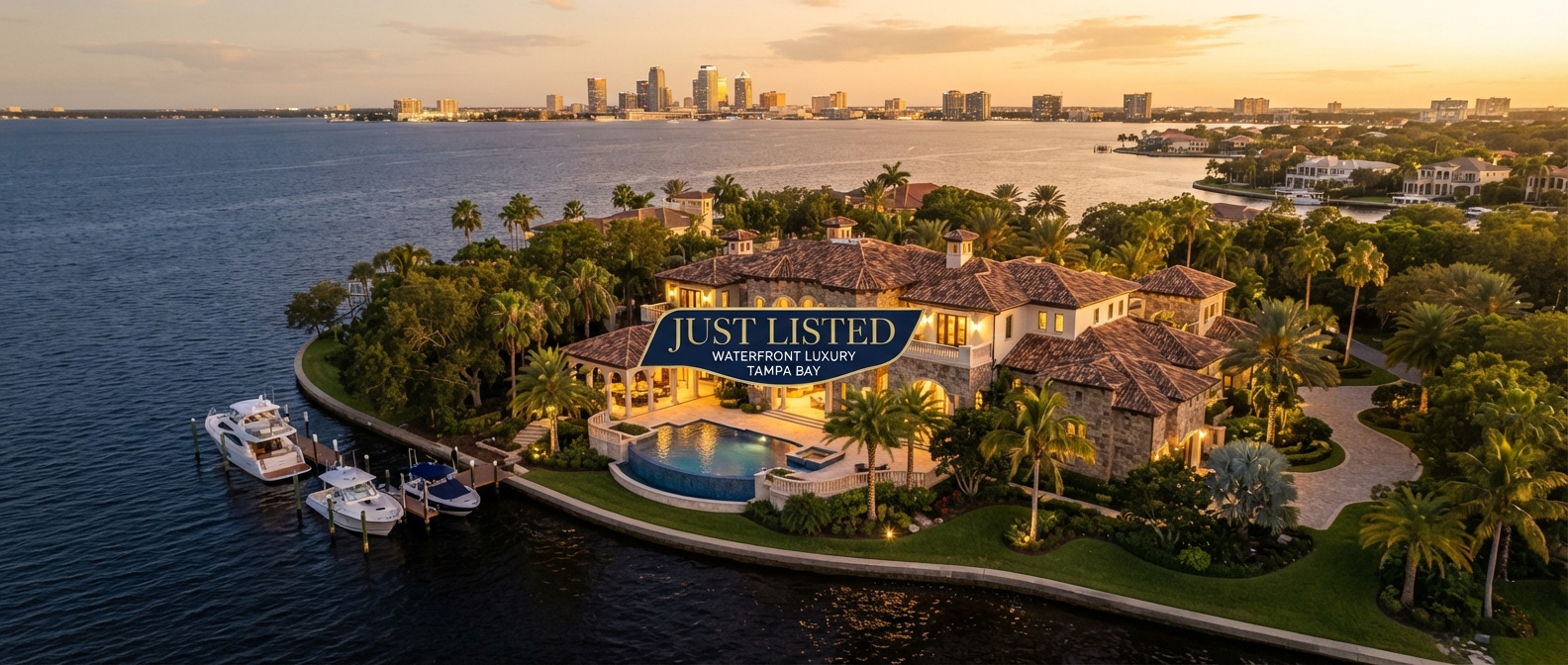
A day-by-day launch plan for Tampa Bay luxury sellers — the positioning, the media, the agent handoff, the private outreach, the broker opens, the offer cadence, and the Day 14 metrics that tell you whether to reshoot, reprice, or negotiate. Run as a controlled campaign, not a passive listing.
Every card below is one trading day. Read left-to-right. Owner actions are the asks that land on your calendar; agent actions are the deliverables that land on the listing desk.
The 14-day launch is the discipline the rest of the Tampa Bay luxury market does not run. Half my sellers close inside this window — most of the other half leave the window knowing exactly what the next two weeks will return. Run the plan, measure at Day 14, then decide what comes next.
Owner: clear the floor, declutter the line of sight, set art back two feet.
Agent: walk the home top-down, scope the light, scope the rooms you shoot first vs last.
The launch window opens with what the camera is going to see — not what the buyer is going to read. Day 1 is declutter (every flat surface), depersonalize (family wall, trophies, coat rack at the front door), and a staging consult that identifies the four or five rooms that carry the listing. Prep is the cheapest input to the launch and most often the one sellers skip.
Owner: be off-property from 7am to 4pm.
Agent: schedule photographer, drone operator, Matterport tech, and a twilight reel if the home has dock frontage.
A Tampa Bay luxury listing reads on its media in the first three seconds. Day 2 produces stills (24mm prime, golden hour, dusk exterior), drone aerials (mansion, dock, water lot line), 4K video walkthrough, 3D Matterport, and a measured floor plan. The package goes to the listing copy on Day 3 — not the other way around.
Owner: sign off on positioning — lifestyle pitch, not feature count.
Agent: write the MLS copy, the syndication headline, and the Just Listed hook used for private outreach.
Luxury does not sell on bedrooms. Day 3 is where the listing develops a single positioning sentence — the one line the entire campaign returns to: "protected view, dock, walkable," or "gated, golf-front, turnkey," or "modernist, architect-built, deep water." Copy is anchored to that line. Replies go out that same night.
Owner: approve the private-network list (other agents, prior clients, internal SERHANT. desks).
Agent: send the Coming Soon alert to 50+ vetted agents, 200+ past clients, and the SERHANT. Florida desk.
Day 4 is the first money day. Private outreach goes out before the listing syndication hits Zillow — so the strongest pool of buyers in Tampa Bay hears about the home first. This is the difference between an offer in week one and an offer in week four.
Owner: approve the teaser asset — a single hero image with the Coming Soon overlay.
Agent: push teaser to Instagram, LinkedIn, and the SERHANT. distribution network.
Coming-Soon creates social permission for buyers to ask about the home before the MLS push. By Day 5 you should have 60 to 120 qualified inbound leads already on the desk — saved, tagged, and queued for Day 7 follow-up.
Owner: sign the price, sign the exposure window, sign the offer-review cutoff.
Agent: run the comp set one last time and confirm the price against Days 14, 21, and 30 absorption targets.
A luxury home that prices wrong in week one buys back time it cannot recover. Day 6 sets the number, the absorption target (Days on Market = price), and the negotiating ceiling. This is also the day the offer-review cutoff is documented — Friday 5pm, or Wednesday noon, depending on the listing cadence.
Owner: confirm showing instructions and lockbox access with the listing agent.
Agent: push to MLS, syndicate to Zillow / Realtor.com / Homes.com, broker alert blast, and follow-up queue opens.
Listings live. Day 7 is the highest-leverage single day for traffic. All queued leads from Day 4 outreach receive the link. Broker alerts fire across the Tampa Bay MLS. The first 24 hours of lead handling discipline determines the first 14 days of pricing power.
Owner: keep the home tour-ready: lights timed, HVAC at show temperature, no pets in the main living areas.
Agent: run a two-hour broker open with refreshments, then a private schedule of agent-led tours with vetted buyers.
The broker open is the first live signal that buyer agents are willing to walk the floor. Private tours scheduled the same afternoon allow the listing agent to control the narrative — feature the view corridor, the kitchen workflow, the dock ergonomics — instead of letting the open house crowd dictate the tour cadence.
Owner: be off-property for the duration; remarking for price confirms only.
Agent: two-hour public open, ID capture, contact-rate logging, and a same-night follow-up queue.
Day 9 is the public signal — the day curious neighbors walk the home and the day unqualified drive-bys self-screen. The leads who show up are tagged A (pre-qualified, broker-represented) or B (curious, no pre-qual). Agent-only follow-up is a same-night call; curious buyer follow-up is a same-night text.
Owner: review the feedback summary — buyer comments, agent commentary, showing-to-offer ratio.
Agent: write a one-page feedback report: what worked, what missed, what to adjust in week two.
Ten days in, you should have 30+ showings, 200+ online saves, and a feedback density that points to a real pattern. Is the price the issue, the media the issue, the access the issue, or the narrative the issue? The report is the document of record that drives Day 11.
Owner: approve the micro-adjustment — typically one of three: re-photograph one room, rewrite the headline, or reposition pricing.
Agent: execute the adjustment. If pricing, communicate the change to the database BEFORE the market sees it on the MLS.
Day 11 is the most undersold day in the playbook. A first-week adjustment reads as disciplined; a fourth-week adjustment reads as a soft listing. The most common adjustment is the headline — repositioning from feature-pitch to lifestyle-pitch. The second most common is a 2 to 4 percent price recalibration for absorption.
Owner: approve the second-wave list — relisted SERHANT. buyers, broker-preview re-invites, and refreshed digital ad spend.
Agent: coordinated outreach plus one targeted digital push (Meta, Google, YouTube) tuned by the Day 10 feedback report.
Day 12 restrengthens the moving parts of the campaign. Buyers who saw the home on Day 7 and want to re-tour after the headline adjustment get a direct follow-up. Digital ad spend reflects the message that worked best in week one — amplifies, not replaces.
Owner: align on negotiating posture — accept-ceiling, contingency posture, inspection scope.
Agent: solicit pre-emptive offers from the top three qualified prospects and prepare a counter framework.
Pre-Day 14 should already be calibrated. If there are no offers, Day 13 is the day the agent requests pre-emptive "best and final" emails from the qualified pool. If there are existing offers, Day 13 is the day the counter strategy is documented — not negotiated.
Owner: receive the launch report — showings, saves, offers, qualified pipeline.
Agent: deliver a 14-day report and decide: hold price, soften price, or pivot strategy.
Day 14 is the line of demarcation. The 14-day report tells you which of three scenarios you are in: (A) the Absorption Rate is on plan, no change needed; (B) the Absorption Rate is soft, the field wants a price or narrative recalibration; or (C) the Absorption Rate is poor, the market is rejecting the listing and a strategic reset — new media, new segmentation, or a price reset — is warranted before week three.
For the cross-discipline read — the buyer-side timeline, the waterfront risk-adjusted framework, the downtown condo checklist, and the south Tampa neighborhood map — see the Tampa Bay luxury agent page. Seller intros and pre-listing reviews start with a 45-min seller consult on Calendly or a direct email to robert.oconnor@serhant.com. For sellers asking what happens after the Day 14 report, the plan continues inside the sell-a-home playbook.
Luxury Tampa Bay inventory does not move on months — it moves on the perception window. The first 14 days determine whether the market reads your listing as a priority buy, a discretionary tour, or a soft listing. That perception is set by the launched price, the first day of media, the lead response time, and the discipline of the feedback loop — not by the sign in the yard.
Sellers who treat the launch as a passive listing event pay for it twice: once in Days 15 to 30 with stale showings and search-engine erosion, and again on exit with a Day-on-Market counter that the next buyer's agent undercuts at the inspection table. A 14-day plan is the alternative — structured, executed, measured, and adjusted before the listing goes stale.
Book a Seller Consult →At Day 14, the launch report reads across four inputs. The combination of those four inputs tells you whether you hold price, soften price, or pivot strategy before week three.
At Day 14 the showings ledger should read as 30+ qualified appointments, with at least half broker-represented. Below 20 means the message is not penetrating; above 45 means the price is leaving money on the table.
Online saves and listing views are the second signal — well-distributed saves from Tampa Bay, Miami, Naples, and a national tail, with view-to-save ratio above 25 saves per 1,000 views. Below that, the headline is not anchoring.
At Day 14 you either have at least one qualified offer under negotiation or three to five written pre-emptive "best and final" indications from the qualified buyer pool. Below that, the price to absorption ratio is wrong.
By Day 14 the feedback ledger should be dense enough to identify the dominant buyer reaction — price concern, room count concern, view concern, dock concern, or HOA/CDD concern. Sparse feedback means showings were not qualified; dense feedback means a micro-adjustment is queued.
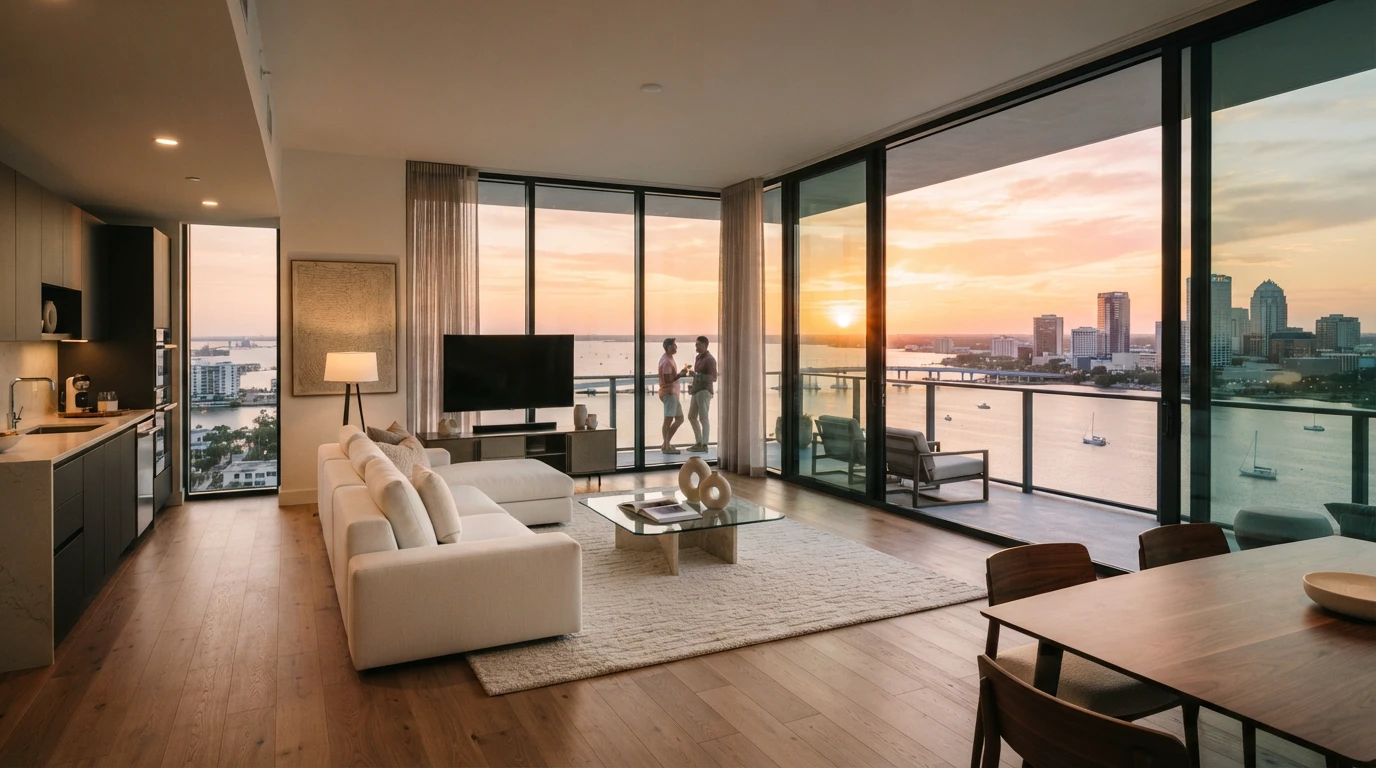
“A listing is a sign in the yard. A launch is a 14-day campaign — and its only deliverable is the Day 14 report.”
The questions Tampa Bay luxury sellers ask most often before they sign a listing agreement — answered before the launch calendar is set.
Day 7 showings are a function of three inputs: pre-market database outreach, media quality, and price. If showings are soft by Day 7, the move is not to wait — it is to run a Day 11 micro-adjustment on the headline and a Day 12 second-wave nudge. A soft Day 7 is recoverable; a soft Day 14 is not.
Price is the lever for absorption speed. The headline and copy are the lever for buyer perception. If showings are soft but feedback is positive, the headline is wrong — re-narrate before you reprice. If showings are present but feedback is price-led, the listing is anchored below absorption — reprice, do not re-narrate. The Day 10 feedback report is the document that distinguishes the two paths.
During the first 14 days every qualified buyer should see the home, by appointment, with the listing agent on site. Broker-only access narrows the buyer pool unnecessarily; fully open access indicates a soft listing. Appointment-only with the listing agent on site is the right cadence — controlled narrative, qualified buyer, follow-up queue closes same day.

A 45-minute seller consult, the 14-day calendar custom-fit to your home, and the launch sequence I run for every Tampa Bay luxury seller I represent — from the Day 1 declutter to the Day 14 measurement report. The plan above, applied to the specific home you are listing.