
Tierra Verde
Best fit
Serious boaters
Quick Gulf access via the intracoastal, deed-restricted streets, elevated construction in most recent builds. The right Tampa Bay waterfront for buyers who use the boat weekly and want the Gulf before lunch.
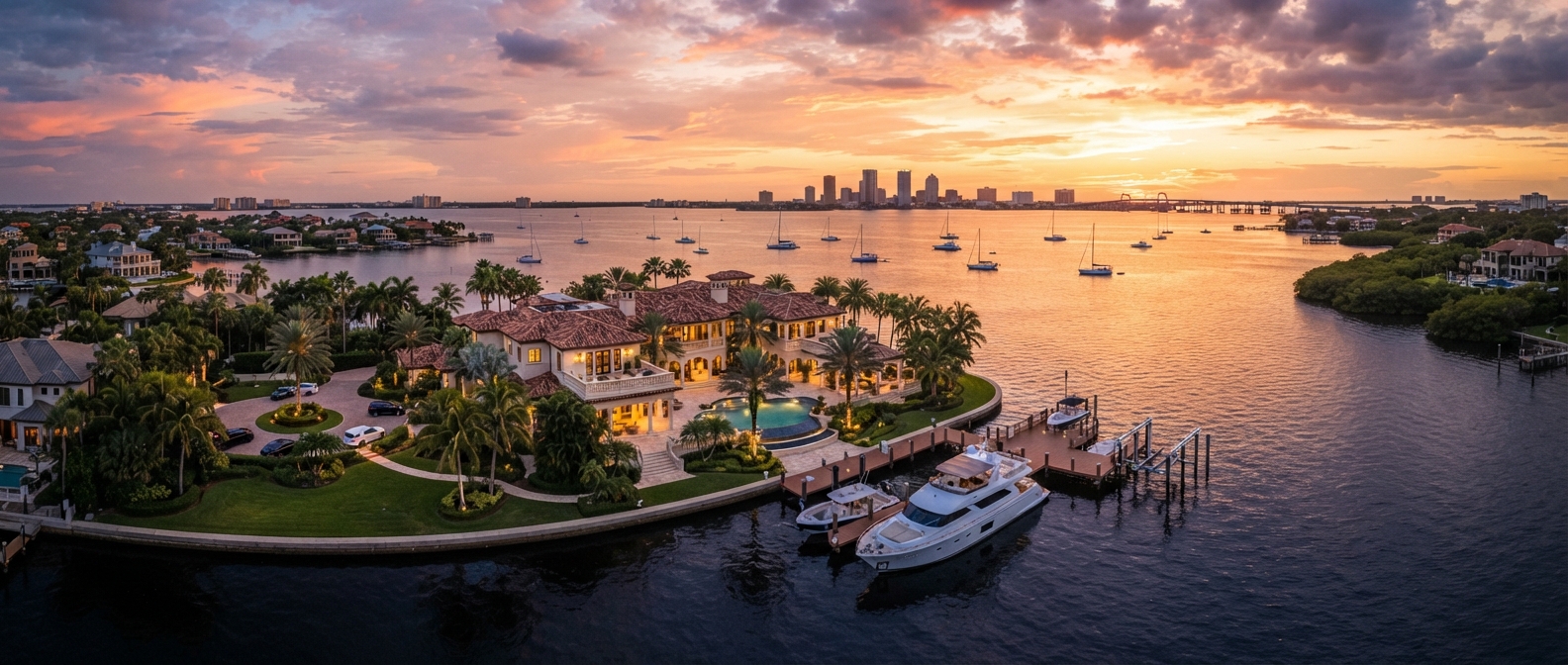
Tampa Bay waterfront is priced like view. It is underwritten like elevation, seawall condition, insurance, boating fit, and resale depth. Five steps to move from listing photography to a risk-adjusted offer — without inheriting a six-figure seawall or a non-renewable insurance hit.
The Tampa Bay waterfront market rewards buyers who prize view corridors and punishes them with insurance renewals, seawall repairs, and resale softness. The way to invert that — the way the buyers I work with consistently do — is to underwrite each home against risk-adjusted comparables before you write, anchor the offer to a real insurance quote, and only then let the view weight into price.
The framework below is the sequence I run with buyers across Tierra Verde, Davis Islands, Harbour Island, Apollo Beach, Old Northeast St. Petersburg, and the rest of the Tampa Bay waterfront map — every phase tied to a document, an inspection, or a quote that lands on the desk before an offer is written.
Tampa Bay waterfront is priced like view, but it is underwritten like elevation. Pull the FEMA elevation certificate, confirm the lowest floor elevation relative to the base flood elevation, and price in the difference between a low-floor coastal home and a properly elevated one. Buyers who skip this step are paying view-corridor prices and inheriting X-zone carrying costs.
Seawall condition replaces curb appeal on a waterfront buy. Confirm build date, cap material, tie-back integrity, and any unpermitted retrofits. A seawall that looks fine at the listing photo can carry a six-figure replacement that the seller has not disclosed. Always pull the original permit history, then walk the wall at low tide.
Sunset photography says one thing; Citizens, TWIA, and the private market say another. Get a real wind + flood quote at the buyer's actual down payment, loan size, and target deductible. The difference between insurable and effectively uninsurable is often the line between a writeable purchase and a pass. Run the number, then anchor the offer to it.
Boating infrastructure is a use-case fit, not a checklist. Confirm channel depth at mean low tide, lift capacity for your hull, davit rating, and the run from the dock to open water — including any no-wake bridges that add five minutes to every outing. The right waterfront for a 38-foot center console is not the right waterfront for a 24-foot bay boat.
Resale liquidity is what protects downside. The Tampa Bay buyer pool for a Tierra Verde Gulf estate is finite, the buyer pool for a Davis Islands bay-front townhome is broader, and the buyer pool for an Apollo Beach new-build is the largest. Underwrite the home against the next buyer's financing test, not just yours.
Tampa Bay is not a single waterfront market — it is six waterfront micro-markets that price, sell, and insure on different cadences. The right submarket for a buyer who treats the boat as a primary use-case is not the right submarket for a buyer who treats the bay view as a backdrop. The map below matches each common Tampa Bay waterfront submarket to the buyer it actually serves — not the headline it advertises.
Serious boaters
Quick Gulf access via the intracoastal, deed-restricted streets, elevated construction in most recent builds. The right Tampa Bay waterfront for buyers who use the boat weekly and want the Gulf before lunch.
Urban executives
Walkable downtown, yacht-club proximity, and a small-plane tie-in. The right Tampa Bay waterfront for buyers who want walkable Tampa, Marine Vibe, and a yacht-club lifestyle without giving up city access.
Walk-tampa + boat
A gated island between downtown Tampa and the Convention Center, with deep-water slips and a private-school commute. The right fit for buyers who want a single-family footprint with downtown-at-the-doorstep rhythm.
Boat-budget buyers
More accessible bay-front price points, larger new-build floor plans, and bigger lift-ready canals. The right Tampa Bay waterfront for buyers with a bigger boat budget than square-footage budget, willing to drive south for value.
Walkability + arts buyers
Brick streets, museum-side downtown, and a stretch of bay-front that anchors art-and-culture buyers moving out of South Tampa at the same floor. Trade Gulf access for walkability and culture.
Beach-first buyers
Sugar-sand Gulf side coupled with intracoastal canal homes behind the barrier islands. The right fit for buyers prioritizing beach-club culture and Gulf viewing, willing to swap open-water Gulf boating for canal and ICW runs.
The comp-validation data, the seawall history, the FEMA cert, and the insurance scenario. HOAs on waterfront are typically null — the four checklists below stand in for what an underwriter would otherwise pull from an HOA resale packet.
| Step | Data required | Why it matters | Red flag |
|---|---|---|---|
| Pre-offer — insurance scenarios | Real wind + flood quote at the buyer's loan size, deductible, and point of elevation | Seawall and elevation save the headline price; insurance saves the monthly carry. | Skip if the listing jumps from 'no flood zone' to 'X' without a cert on file. |
| Seawall / bulkhead audit | Permitted build date, cap material, tie-back integrity, low-tide visual inspection | Seawall replacement is a six-figure item. Sellers rarely disclose a known retrofit window. | Skip if no permit history exists with the county or city. |
| Elevation certificate | FEMA cert, lowest floor elevation, vented enclosure compliance, BFE comparison | Elevation drives premium, lender tolerance, and post-storm recovery. | Skip if the listing agent waves FEMA risk and offers no cert. |
| Comp validation at risk-adjusted $/sqft | Three closed comps within 90 days, similar seawall status, adjusted for elevation | Comparable sales on waterfront without seawall-vs-seawall adjustment are the most common overpricing mechanism. | Skip if only active listings are used, or if comps ignore seawall status. |
The questions Tampa Bay buyers most often ask after the framework — answered before we set up the due-diligence calendar.
Pretty is view-corridor photography and a deepwater perception. Priced right is seawall condition, elevation certificate, insurance scenario, and comp validation all in line with the asking price. The framework above pulls your underwriting off the listing mood-board and onto a risk-adjusted comp set with insurance, seawall, and elevation factored in before you write.
A real wind + flood premium quoted at your actual down payment, loan size, and deductible — not the listing agent's verbal claim. Run that quote with two insurer paths where possible: a Citizens / TWIA path and a private-market path. Allow a 15-30% premium buffer for the first renewal cycle. If the premium breaks the deal, you wanted to know before you wrote the offer.
Fifteen to twenty-one days is the working window for a confident Tampa Bay waterfront contract. That gives you time for the seawall inspection, elevation certificate review, insurance quote, marine survey, and comp pull. Anything shorter, and you are accepting unknown risk on seawall or elevation. Anything longer than twenty-one days, and you may be underwriting stalling rather than due diligence.
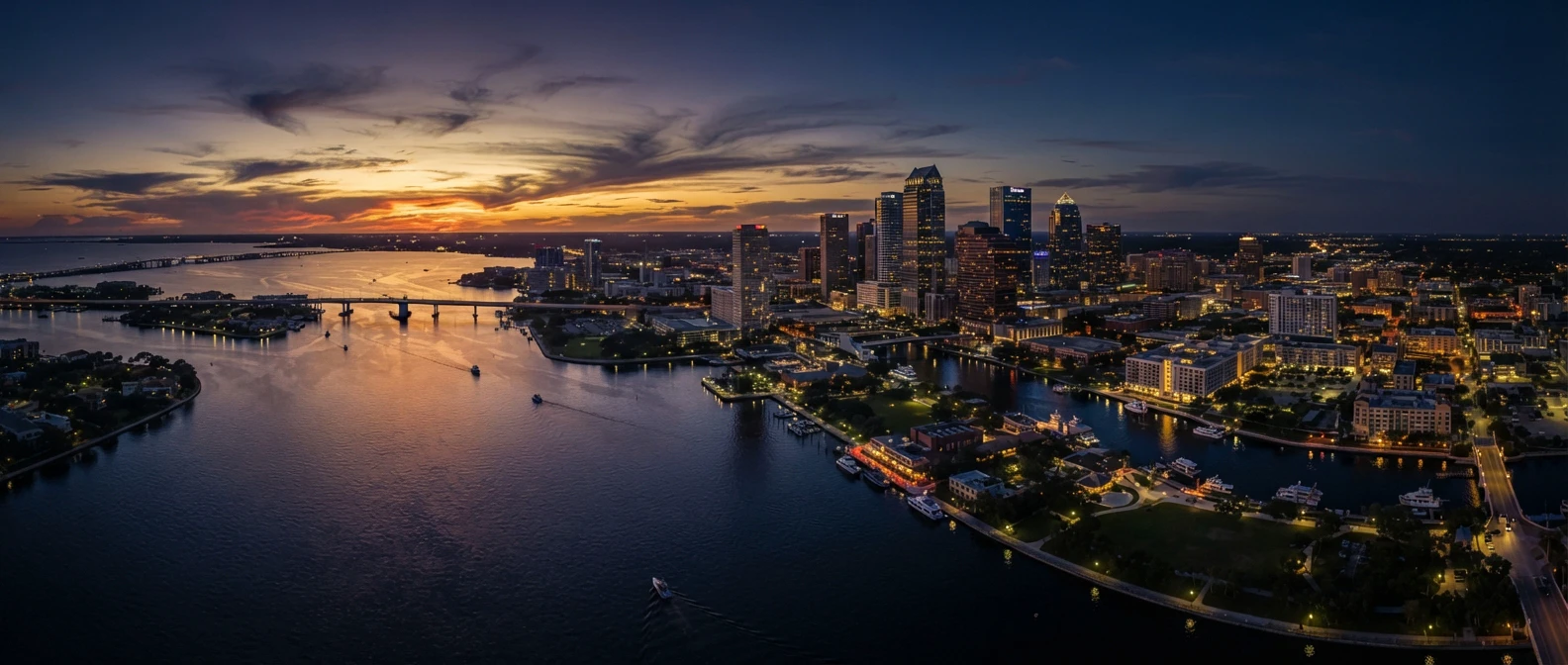
A 30-minute buyer consult, one Tampa Bay waterfront property: elevation cert pulled, seawall history checked, insurance scenario quoted, comp set adjusted, and a risk-adjusted offer range before you write. The framework on this page, run on the specific listing you are considering.